
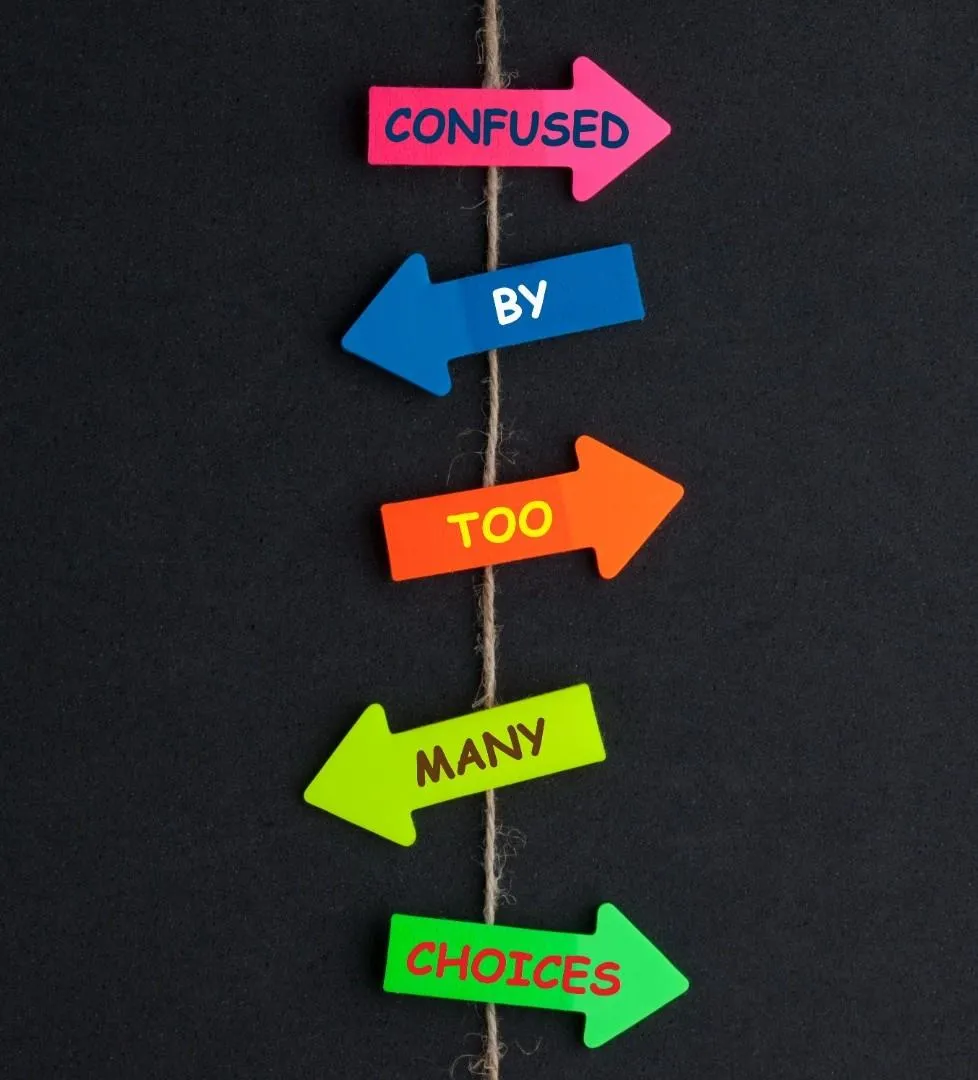
You can afford a lot. Just not everything.
One thing I’ve noticed about money, especially in midlife, is that the challenge is often not a lack of options.
It’s the opposite.
There are too many good ones.
A nicer home.
Better school options for the kids.
More travel.
More investing.
Working less sooner.
Enjoying life more now.
And the truth is, many of us want all of it.
Which is understandable.
After all, people work hard. They want to enjoy the rewards of that hard work while also making smart decisions for the future.
But here’s something interesting I’ve noticed:
No matter what a household earns — whether it’s $300k or $600k — nobody gets everything.
Because financial resources are always limited.
At every income level, trade-offs still exist.
The house, the lifestyle, the investing, the travel, the future freedom…
something always competes with something else.
And this is where money becomes tricky.
Because financial decisions are rarely about choosing between good and bad.
They’re usually about choosing between good and good.
That’s why many people quietly feel stuck.
Not because they’re bad with money.
But because trade-offs feel uncomfortable.
So instead of making intentional decisions, money often gets spread in many directions.
A bit here.
A bit there.
Trying to make progress everywhere at once.
And over time, priorities quietly get decided anyway — just not intentionally.
I think this is one of the most overlooked parts of financial planning.
It’s not just about numbers or returns.
It’s about getting clearer on what matters most to you, what season of life you’re in, and what trade-offs are actually worth making.
Sometimes, better financial decisions start with a simple question:
What matters most right now?