The Second Brain Connection: Gut Microbes, Brain Signals, and Easier Digestion
3 MIN READ
Science
We often think of digestion as a straightforward process—food goes in, nutrients come out. But there's a much deeper conversation happening inside you every day, involving your brain, your gut microbes, and the intricate pathway that connects them.
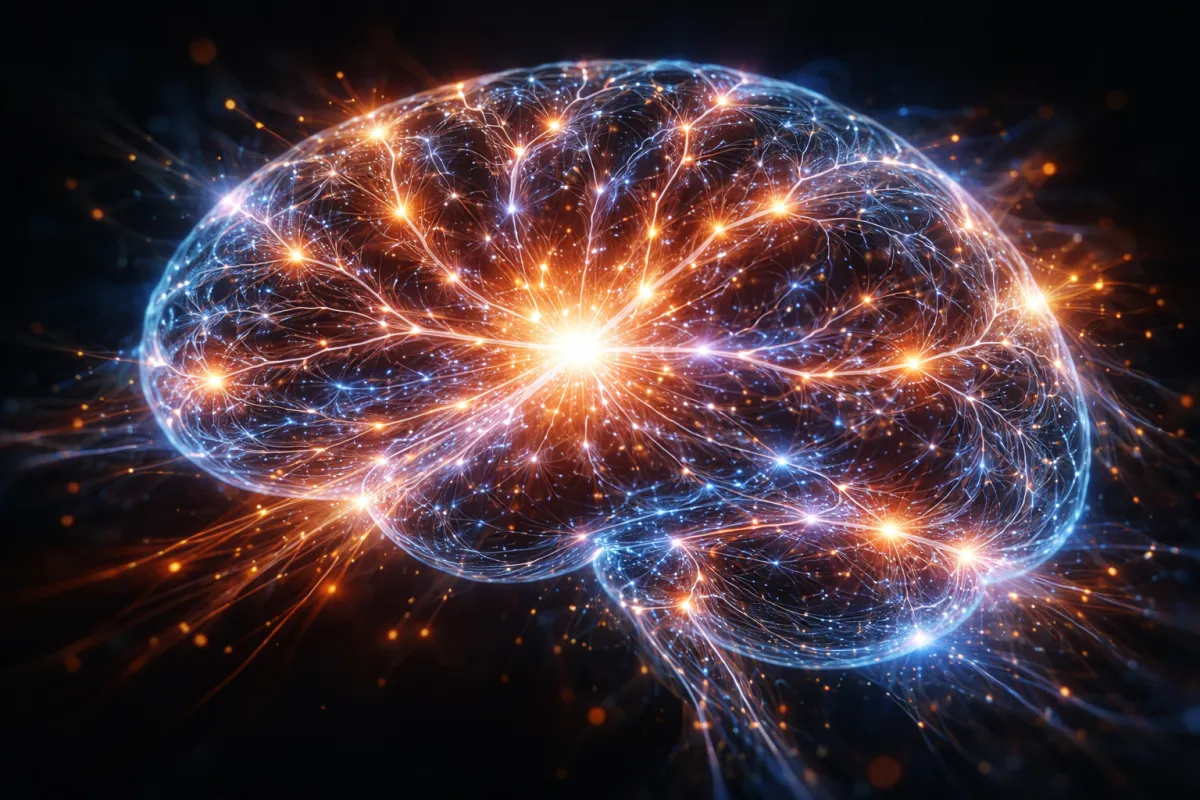
The gut-brain axis is a two-way communication highway. Signals travel from your gut to your brain (via the vagus nerve and other pathways), and your brain sends messages back to your gut, influencing how fast or slow digestion happens, how much acid is produced, and how food moves through you.[1] This constant dialogue affects everything from how comfortably you process a meal to how energized or foggy you feel afterward.
The Journey Starts in Your Mouth
The moment food touches your tongue, your body springs into action. Saliva releases enzymes that begin breaking down starches.[2] As you chew, your teeth mechanically tear food apart, making it easier for the next stage. Once swallowed, the food travels down the esophagus into your stomach—a muscular, acid-filled chamber that churns and mixes everything with powerful gastric juices (about 6–8 cups produced daily, with a pH similar to lemon juice—highly acidic yet perfectly contained).[3]
Your stomach lining is protected by a thick mucus layer and rapid cell turnover, so the acid doesn't damage you.[4] When partially digested food leaves the stomach, your pancreas releases bicarbonate to neutralize the acid, creating the right environment for absorption in the small intestine.[5] Bile from the liver helps break down fats, and enzymes finish the job.[6] Under ideal conditions, this whole process—from mouth to elimination—takes 24–72 hours.[7]
Where Your Gut Microbes Step In
Not everything can be broken down by your own enzymes. What's left reaches the large intestine—and that's where your trillions of gut microbes take over. They ferment fibers and other compounds we can't digest, producing beneficial short-chain fatty acids, vitamins, and other metabolites that support energy, immunity, and even mood.[8]
When this system works in harmony, your microbes help extract extra nourishment, strengthen your gut lining, and keep inflammation in check.[9] But when the gut-brain communication gets disrupted—often from chronic stress, poor sleep, or repeated exposure to foods that don't agree with your unique microbiome—things can go off track. Food arrives in the large intestine less broken down, feeding the wrong microbes and leading to gas, bloating, irregular bowel movements, or discomfort.[10]
When the Conversation Gets Disrupted
Many women experience this as vague, frustrating digestive issues that come and go—sometimes labeled as IBS (irritable bowel syndrome). IBS isn't a single disease with one cause; it's a pattern of symptoms that can stem from imbalanced microbes, altered gut motility, increased gut permeability ("leaky gut"), stress signals overriding digestion, or food sensitivities.[11] For some, it means avoiding social meals, worrying about travel, or feeling limited in daily life.
The rise in IBS diagnoses reflects how modern lifestyles—high stress, processed diets, irregular eating—can throw off this delicate balance.[12] Yet the gut-brain-microbiome connection also means small, supportive changes can often bring relief.[13]
A Path Toward Gentler Digestion
Listening to your body and nurturing this partnership doesn't require extremes. Simple steps like consistent meal timing, stress-reducing practices, adequate sleep, hydration, and choosing foods that feel good for your unique system can help restore smoother communication and more comfortable digestion.[14]
In my work with women 45+, I've seen how honoring these signals—without judgment—often brings back a sense of ease around food, more steady energy, and the freedom to enjoy meals and life again. Your gut isn't working against you; it's trying to talk to you. With gentle attention and care, that conversation can become a lot more harmonious.
You've got this—one mindful bite, one calm breath at a time.
References / Footnotes
[1] Carabotti M, et al. (2015). The gut-brain axis: interactions between enteric microbiota, central and enteric nervous systems. Annals of Gastroenterology.
[2] Humphrey SP, Williamson RT. (2001). A review of saliva: normal composition, flow, and function. Journal of Prosthetic Dentistry.
[3] Schubert ML. (2003). Gastric secretion. Current Opinion in Gastroenterology.
[4] Allen A, Flemström G. (2005). Gastroduodenal mucus bicarbonate barrier: protection against acid and pepsin. American Journal of Physiology-Cell Physiology.
[5] Boron WF, Boulpaep EL. (2016). Medical Physiology. (Pancreatic bicarbonate secretion).
[6] Hofmann AF. (2009). Bile acids: trying to understand the data in relation to diet and health. Current Opinion in Lipidology.
[7] Degen LP, Phillips SF. (1996). Variability of gastrointestinal transit in healthy women and men. Gut.
[8] Koh A, et al. (2016). From dietary fiber to host physiology: short-chain fatty acids as key bacterial metabolites. Cell.
[9] Rooks MG, Garrett WS. (2016). Gut microbiota, metabolites and host immunity. Nature Reviews Immunology.
[10] Mayer EA, et al. (2014). Gut/brain axis and the microbiota. Journal of Clinical Investigation.
[11] Simrén M, et al. (2018). Intestinal barrier function in health and disease. Gut.
[12] Lovell RM, Ford AC. (2012). Global prevalence of and risk factors for irritable bowel syndrome: a meta-analysis. Clinical Gastroenterology and Hepatology.
[13] Cryan JF, Dinan TG. (2012). Mind-altering microorganisms: the impact of the gut microbiota on brain and behaviour. Nature Reviews Neuroscience.
[14] Madison A, Kiecolt-Glaser JK. (2019). Stress, depression, diet, and the gut microbiota. Current Opinion in Behavioral Sciences.
