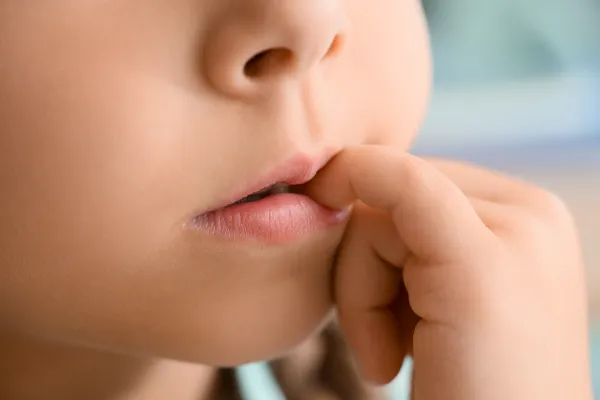
Bite Constellation - Nail Biting
The Bite Constellation: When You Couldn’t “Bite Back”
For years, I bit my nails.
I also had countless cavities as a child. At the time, it was framed as bad habits, weak enamel, poor brushing, anxiety, or even genetics. But when I began to understand Germanic Healing Knowledge, the pattern made sense in an entirely different way.
In GHK, what is called a Bite Constellation is a specific cerebral medulla constellation involving dentin, the inner structure of the teeth. Biologically, dentin relates to what is known as a bite conflict. This is experienced as not being able to bite an opponent. Not being able to defend yourself. Not being able to snap back. Not being in an equal position of power.
For a child, that situation is common.
You are smaller. Weaker. Dependent. You cannot confront a parent, an older sibling, or an authority figure. You cannot express your anger fully. You cannot challenge what feels wrong. The body registers that inability.
In the brain level, dentin is controlled from the cerebral medulla. The left teeth are controlled from the right hemisphere, and the right teeth from the left hemisphere. Biological handedness and whether the conflict involves mother-child or partner dynamics determine where the shock registers.
A constellation forms the moment a second conflict hits the opposite hemisphere. The two relays become active together. From that point, behavior changes.
In the Bite Constellation, the compensation often shows up as compulsive nail biting, or onychophagia. Conventional psychology classifies this as an obsessive-compulsive behavior. But from a biological perspective, the compulsion serves a purpose. It symbolically replaces the bite that could not be delivered outward.
If you cannot bite the opponent, you bite your own nails.
The behavior often intensifies when a person is set on a track. A track is anything associated with the original conflict. A smell. A place. A tone of voice. A situation.
For me, the car became a track.
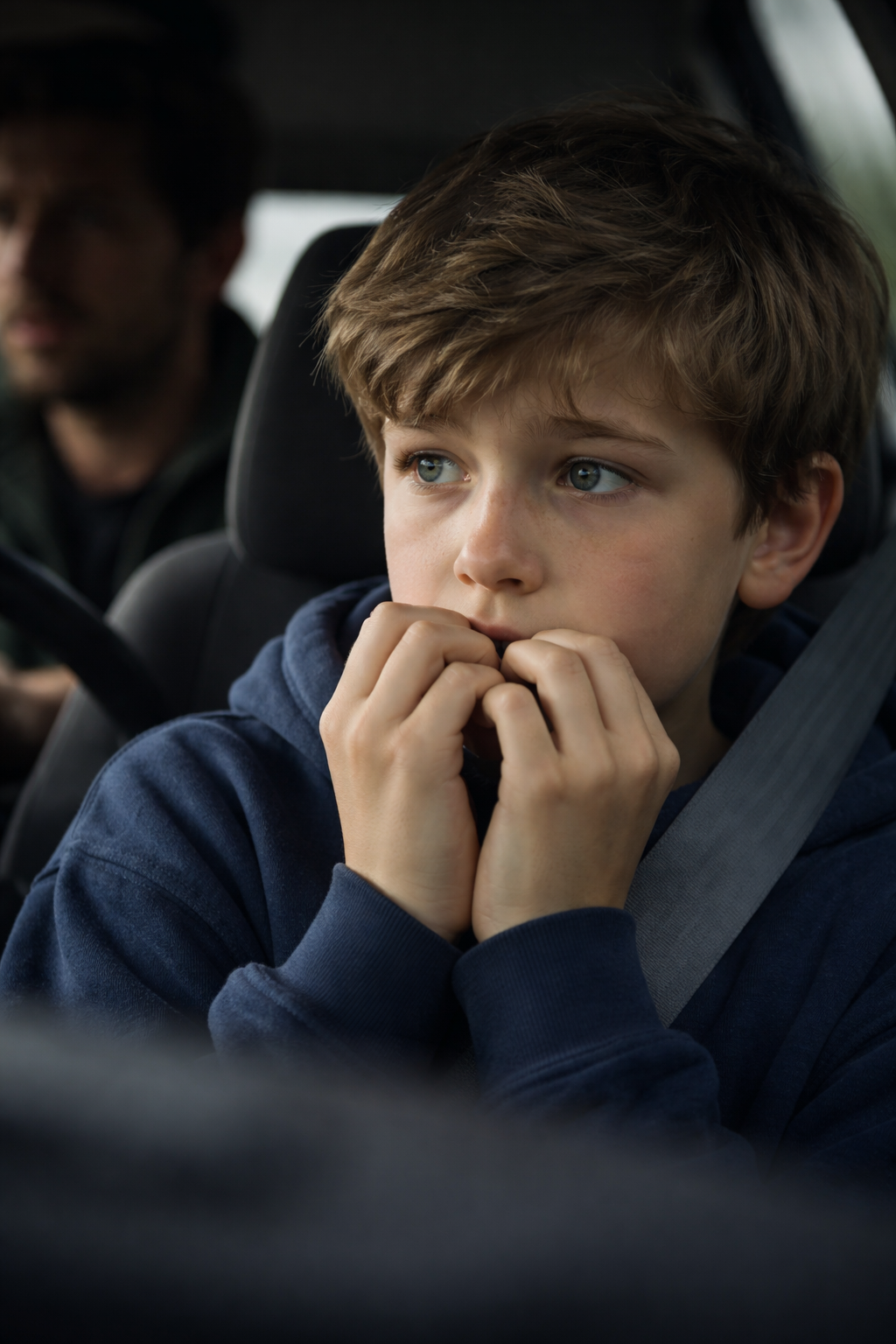
My father used to drive drunk. We would get lost. We ended up in neighborhoods that felt unsafe and unpredictable. I was small, strapped in, powerless. I could not protest in a way that would change anything. I could not “bite.” I could not stop it.
Even now, I notice the urge to bite my nails more in the car. Not because I am consciously afraid, but because the body remembers. The track activates the old relay.
Stress amplifies the behavior. A strong track makes it excessive. The constellation can become permanent if the conflicts keep relapsing. Or it can soften as the original conflict is understood and downgraded.
It is also no surprise that nail biting is most common in children and adolescents. They live in a world structured by hierarchy. Parents, teachers, older siblings. They frequently feel resistance but lack power. The bite cannot be delivered outward, so the energy turns inward.
Looking back, my cavities also fit the picture. During conflict-active phases, dentin can undergo biological changes. When these programs cycle repeatedly, the tissue is affected. It is not random. It is specific.
Understanding this did something unexpected for me.
It removed shame.
The nail biting was not weakness. It was adaptation. It was my nervous system finding a way to discharge tension when I could not confront what felt unsafe.
When we see behavior through a biological lens instead of a moral one, compassion replaces judgment.
And that is often the beginning of resolution.
When the adult self can finally say what the child could not.
When safety is restored.
When the track is recognized.
When authority no longer feels overwhelming.
When the body understands it is no longer in the weaker position.
The compulsion no longer needs to compensate.
Sometimes the most healing thing we can do is understand why the body did exactly what it was designed to do.
And then gently let it know: we are not there anymore.